The right landscape supply can make or break a new garden bed because nutrient-balanced soil blends, proper organic mulches, and clean aggregates dictate moisture retention and root respiration. If low-grade topsoil laden with weed seeds or heavy clay is installed, plants suffer from nutrient lockout and root asphyxiation, leading to premature bed failure.
The Technical Science of Soil Porosity and Organic Amendment Ratios
Understanding why material selection determines horticultural success requires examining the balance of soil pore space, water infiltration, and biological activity. When establishing a new garden bed, combining local topsoil with high-grade compost and coarse amendments creates an ideal 50/50 ratio of solid minerals to pore space. This balance allows plant roots to access oxygen while retaining essential moisture during dry summer months.
Key Landscape Supply and Soil Definitions
- Bulk Organic Compost: A fully decomposed organic material rich in beneficial microorganisms that provides slow-release macronutrients to new plantings.
- Soil Bulk Density: A measurement of soil compaction; lower bulk density indicates looser, more porous soil that encourages deep root penetration.
- Aesthetic Double-Shredded Mulch: A fibrous wood mulch that knits together to resist wind displacement while slowly regulating soil temperature and suppressing weeds.
| Landscape Material Type | Primary Horticultural Function | Susceptibility to Weed Infiltration | Impact on Root Development |
| Unprocessed Fill Dirt | Base elevation filler only | Extremely High (full of weed seeds & roots) | Severe compaction and root suffocation |
| Standard Bark Nuggets | Decorative surface dressing | Low (decomposes slowly over seasons) | Moderate (does not improve underlying soil) |
| Custom Enriched Garden Mix | Nutrient delivery & moisture retention | Low (pasteurized and weed-seed free) | Exceptional (promotes vigorous root growth) |
During a recent site assessment for a residential client, our technical team examined how regional Piedmont clay soils impact root respiration and moisture retention in newly installed flower beds. Utilizing a dependable landscape supply in Salisbury, NC ensures that your custom soil blends are perfectly engineered to overcome local compaction challenges right from day one.
Chronological Stages of Proper Garden Bed Installation and Material Layering
Executing a thriving garden bed installation requires a strict, multi-stage material sourcing and layering protocol. When property owners search for top-tier Salisbury landscape supply options, understanding this progressive installation timeline highlights why skipping proper soil amending leads to poor plant establishment.
- Sub-Grade Excavation & Tilling
Clear existing turfgrass and loosen the native sub-grade soil to eliminate hardpan compaction layers.
- Custom Soil Blend Integration
Import and incorporate nutrient-rich organic topsoil and compost blends designed specifically for regional planting requirements.
- Planting & Root Ball Inoculation
Position perennials and shrubs, backfilling with native soil mixes to encourage lateral root expansion.
- Protective Mulch Layer Application
Apply a 2-to-3-inch layer of double-shredded hardwood mulch across the bed surface, keeping material clear of plant stems.
We routinely assist landscape contractors and homeowners throughout Charlotte, Concord, and Mooresville in executing these precise material staging protocols. Ensuring that every Salisbury, NC landscape supply delivery arrives on schedule guarantees that your project moves forward without costly delays or subpar growing mediums.
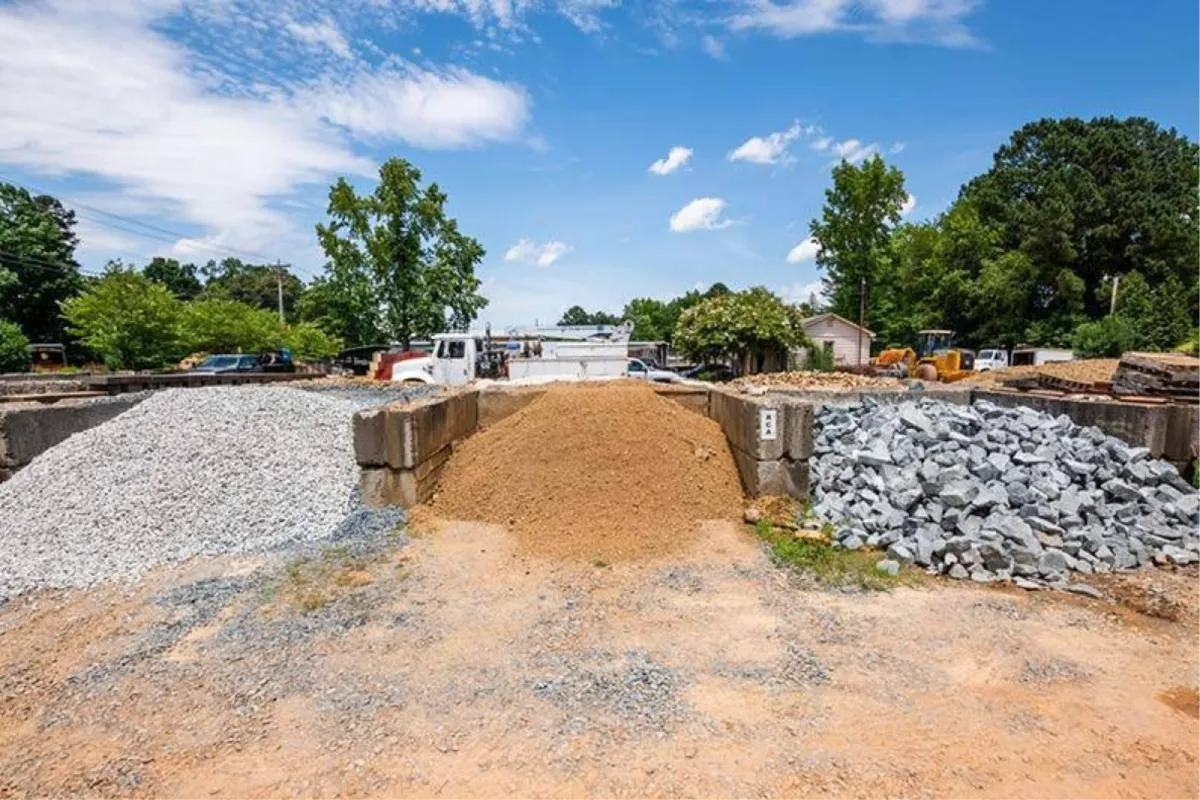
How-to: Evaluating Landscape Material Quality Before Purchase
Determining whether bulk landscape supplies meet professional horticultural standards can be evaluated through a structured physical and visual inspection protocol. Follow these core steps:
- Check Moisture and Texture Consistency: Grab a handful of topsoil and squeeze it; it should hold a loose shape without feeling like sticky, impermeable clay or dry sand.
- Inspect Mulch Fiber Uniformity: Verify that bulk mulch is free of large wood chunks, plastic trash, or chemical dyeing odors that can harm plant tissue.
- Inquire About Screening and Weed Control: Ask suppliers if topsoil and compost blends have been mechanically screened and thermally composted to eliminate viable weed seeds.
Whether you are designing a compact residential courtyard or managing a sprawling commercial planting project, executing this material evaluation protocol protects your investment. Sourcing premium landscape supply in Salisbury materials gives you absolute confidence that your plants will thrive in a clean, nutrient-dense environment.
Debunking the Myth: “Any Cheap Dirt or Free Fill Soil from Craigslist Works Just as Well as Professional Landscape Mixes”
A widespread gardening misconception is that topsoil is just dirt, meaning homeowners can save money by hauling free fill dirt or unsterilized yard soil for a new garden bed.
In reality, unverified fill dirt is often contaminated with persistent weed seeds, construction debris, heavy clay, and harmful pathogens that will choke out new plants and create endless weeding labor. Investing in professionally blended, nutrient-rich landscape supplies ensures proper drainage, balanced pH levels, and a clean foundation that guarantees plant survival.
Applying Our Professional Supply Standards
To address the demanding challenges of outdoor property enhancement, where soil erosion, nutrient depletion, and weed pressure threaten your plantings, we anchor our material delivery processes in a rigorous quality framework.
At Andolina Materials, our brand is reliable, knowledgeable, and community-oriented. We strive to be a helpful partner for our customers, providing top-quality materials and services to make their landscaping projects easier and more successful. Guided by a strong commitment to customer satisfaction, our experienced team provides the best materials while prioritizing timely delivery to keep your project running smoothly.
When you partner with our team, we leverage our comprehensive standards, including being the most reliable provider of landscape materials and a one-stop shop for all your finest landscaping materials. Backed by over 15+ years in business, we ensure that we offer premium products; we deliver exceptional value right to your job site. Whether you need expert advice on soil amendments or prompt trucking coordination, we are here to support your success.
Build a Thriving Garden Bed Today
Leaving your new plantings vulnerable to poor soil compaction, weed seeds, and nutrient lockout leads to disappointing growth and dead plants. You don’t have to compromise when Andolina Materials provides premium landscape supplies and professional delivery to help you create a healthy, productive garden bed.
Contact us today to schedule your bulk material delivery, and experience the ultimate return of vibrant plant growth, rich soil structure, and long-lasting peace of mind!
Frequently Asked Questions
How deep should the soil mix be when creating a new garden bed?
New garden beds generally require a minimum of 8 to 12 inches of quality enriched topsoil and compost blend over loosened native soil for optimal root development.
Is bark mulch or shredded hardwood better for plant health?
Shredded hardwood mulch is generally superior for garden beds because it interlocks to stay in place on slopes and gradually breaks down to enrich the soil underneath.
Why are my plants turning yellow after installing a new garden bed?
Yellowing leaves often indicate poor drainage or compacted soil that restricts oxygen flow to the roots, emphasizing the importance of using porous, well-amended landscape supplies.
Can I mix native clay soil directly with bagged topsoil?
Directly mixing heavy native clay with loose topsoil can create textural interfaces that trap water like a bowl; it is better to till and amend the entire upper soil profile uniformly.
How often should organic mulch be replenished in a garden bed?
Organic mulch breaks down over time to enrich the soil, so adding a fresh 1-to-2-inch top-dress layer once a year in the spring is recommended to maintain weed suppression and moisture retention.